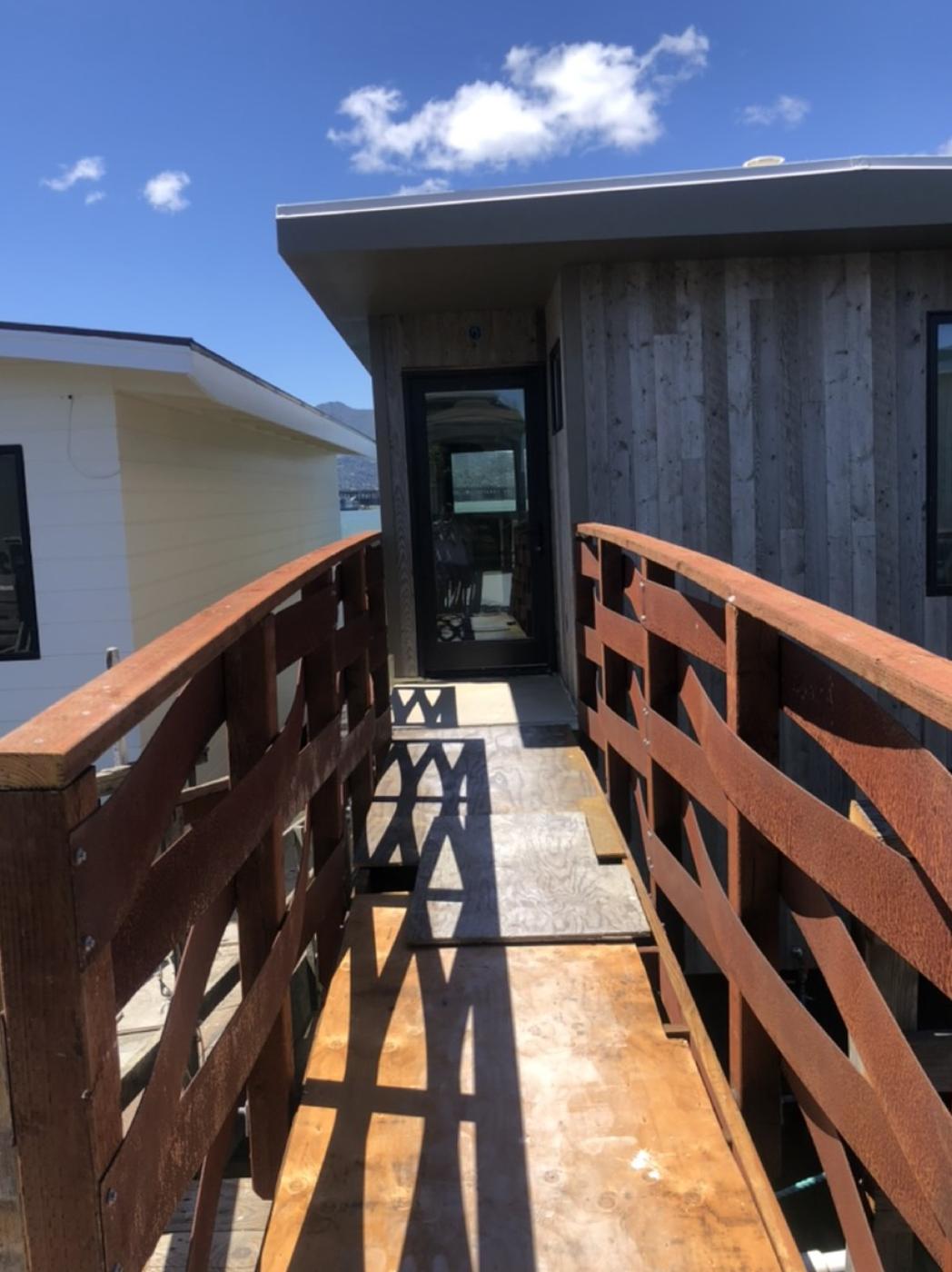
Renovating a Sausalito floating home is one of the most rewarding real estate projects imaginable — and one of the most complex. The combination of marine-specific structural considerations, local permitting requirements, dock access logistics, and the need for contractors who understand liveaboard construction creates a project environment that's meaningfully different from renovating a land home. Buyers considering a project home on the water should understand these factors before they fall in love with the potential of a fixer.
Permits and Jurisdiction
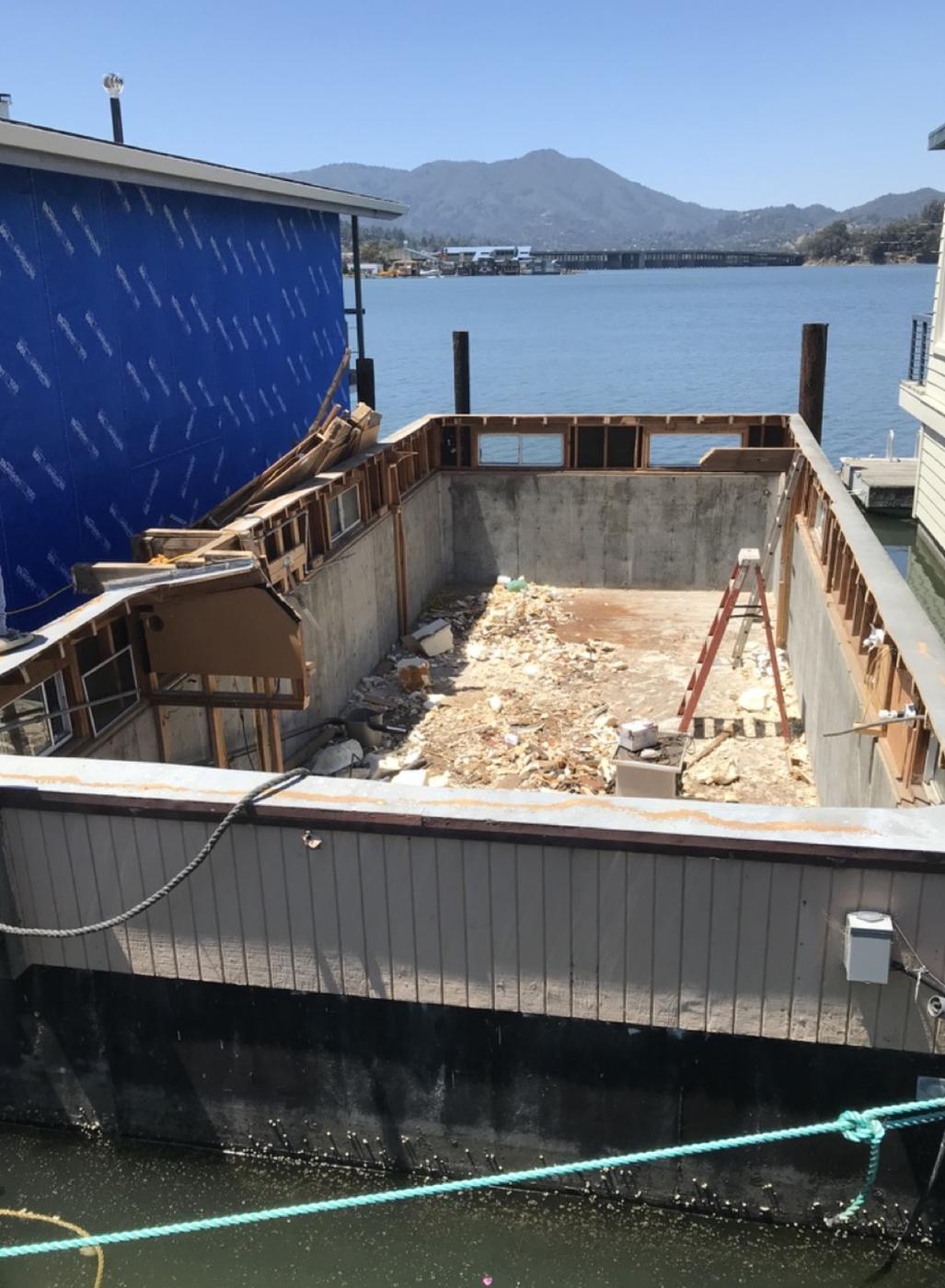
Floating home renovations in Sausalito typically involve permits from the County of Marin. The specific permits required depend on the scope of work — cosmetic interior work may require minimal permits, while structural additions, deck expansions, or changes to the home's footprint can involve months of review. This is not a process to navigate without professional guidance from an architect or contractor experienced in Bay-area floating home work.
Weight Distribution
Every structural or material decision in a floating home renovation affects weight distribution — and weight distribution affects the home's trim and the loading on the slip infrastructure. Adding a concrete or tile floor covering, for example, adds substantial weight that a wood frame home may not be designed to carry. Adding a rooftop deck changes the center of gravity and can affect how the home sits in the water.
Experienced floating home contractors and architects think about weight constantly. They spec lightweight materials — composite decking, aluminum railings, lightweight concrete alternatives, spray foam insulation — not just for cost reasons but because weight management is a fundamental design constraint that doesn't exist in land home renovation. Buyers who want to renovate should budget not just for materials and labor but for the design expertise required to think through these issues correctly.
Contractor Access and Logistics
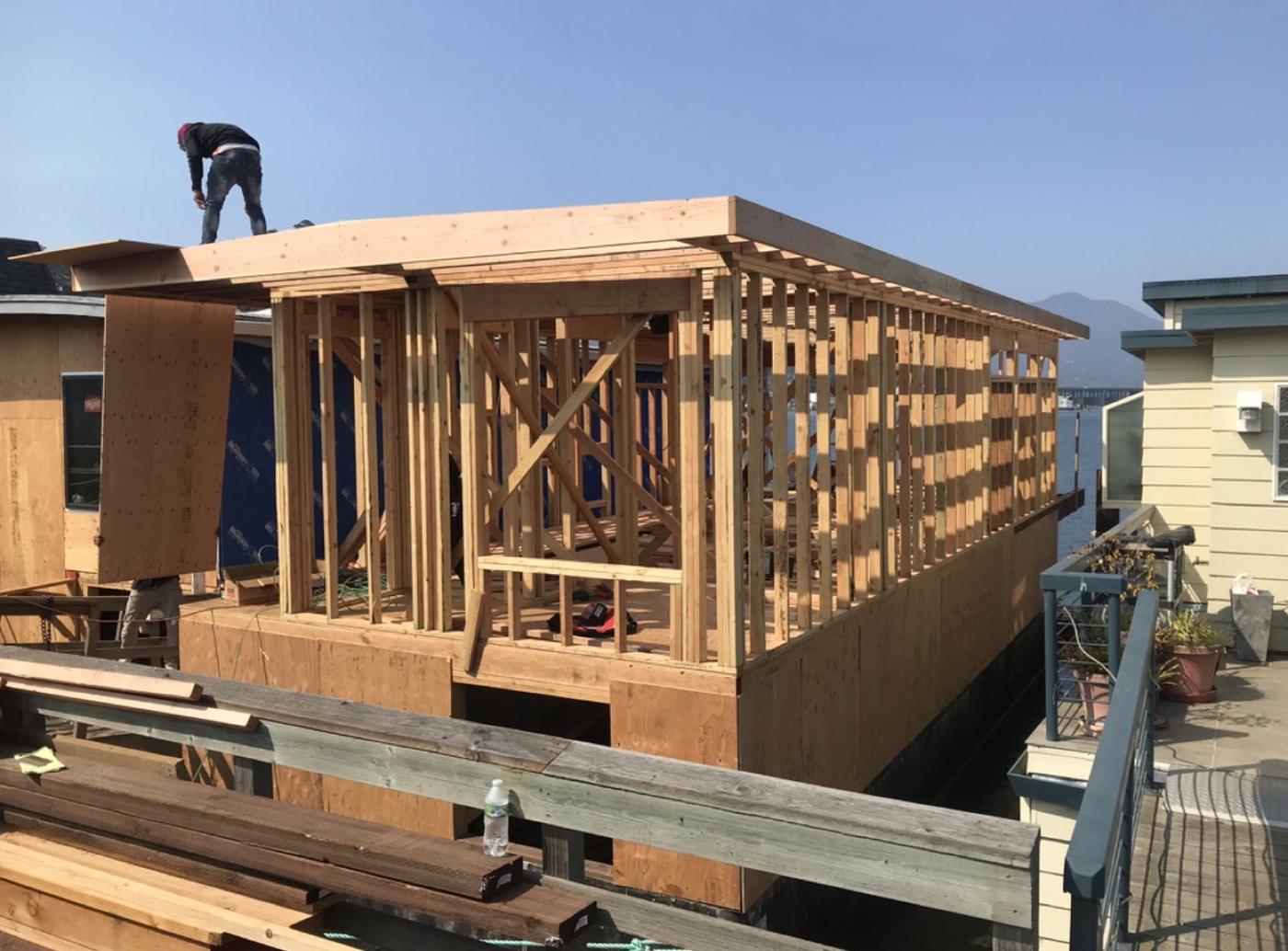
Getting materials and equipment onto a floating home is logistically more complex than a land renovation. Everything has to come down the dock gangway — no driveway delivery, no forklift access, sometimes no wheeled cart access depending on the gangway configuration. Large items (appliances, large fixtures, lumber in quantity) require planning and sometimes temporary crane or barge assistance.
Finding contractors willing to work on floating homes is also a smaller pool than the general contractor market. The best floating home contractors in Sausalito know the docks, understand the permit process, and have relationships with the marine tradespeople — electricians, plumbers, bilge system specialists — whose work is different in a floating home context. Ask Paul and Roman for contractor referrals: they know who does quality work on the water.